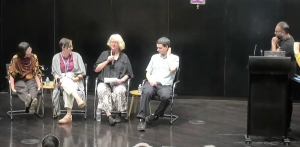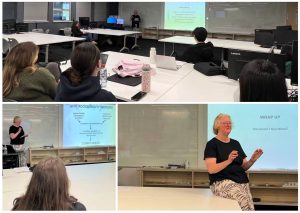
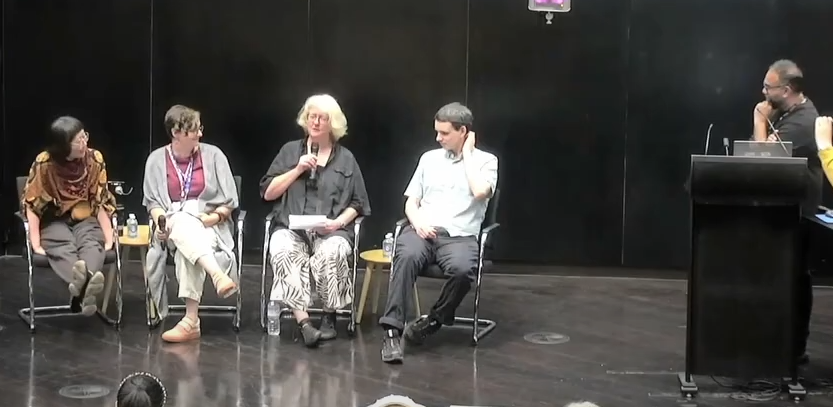
Panel members discussed undertaking PhDs at the built environment–disability intersection. A brief summary of Mary Ann’s contribution to the dialogue follows.
Q. What prompted doing a PhD with a focus on disability?
A. Firstly, a commitment to periodic serious study, undertaken roughly once a decade alongside professional practice. Secondly, it is a legacy project, extending work on the Universal Mobility Index, a neighbourhood-scale accessibility assessment led by people with disability. Lastly, the research focuses not on disability itself, but on built environment accessibility praxis, sustainability, and usefulness, critically examining how and why the built environment—and the architecture profession—enables disabling conditions.
Q. What were the most enjoyable and most difficult parts?
A. The most difficult aspect was managing time-intensive group-based fieldwork across two participant cohorts and navigating ethics approval systems that (particularly within architecture faculties) tend to privilege ableist, easily approved research. The most rewarding aspect was witnessing participants’ enthusiasm during experiential site sessions. These sessions quickly evolved from mere records of necessary measurement data into shared, in-depth “being-along” experiences, generating rich conversations and learning between architect-participants and participants with disability.
Q. How were the participants with disability recruited?
A. Participants with disability were recruited through long-term relationship building rather than short-term outreach. Over many years working in built environment accessibility, [Mary Ann] regularly attended disability advocacy and public consultation events, observed, listened, and formed meaningful connections across disciplines. This sustained presence enabled trust and engagement. Despite this groundwork, recruitment remained time-consuming and challenging, as coordinating availability and securing research participation is inherently complex.
Video capture of the day’s proceedings can be found on the MSD website: https://msd.unimelb.edu.au/ableist-cities